Ventspils Steps Toward Renewable Methanol: Biorefic NRG Advances a 50,000-Tonne plant IEA
Biorefic NRG is advancing a renewable methanol plant in the Ventspils Free Port, designed to produce up to 50,000 tonnes a year from wood residues, RDF, captured CO₂ and green hydrogen. With the environmental impact assessment now formally underway, the project is a concrete signal that Latvia's ports are positioning themselves as Power-to-X and alternative-fuel hubs.
NEWS
HydrogenLatvia
6/4/20263 min read
It's one thing to talk about Power-to-X as a future Latvia should aim for. It's another to watch a local developer file the paperwork and start moving a real plant through the permitting process. That second thing just happened in Ventspils — and it's the kind of milestone worth pausing on.
In late April 2026, Latvia's Energy and Environment Agency confirmed that SIA Biorefic NRG must carry out a full environmental impact assessment for a renewable methanol plant planned inside the Ventspils Free Port. The decision sounds procedural. But for anyone tracking where Baltic molecules actually get built, it marks the point where an idea becomes a project with a site, a feedstock plan, and a regulatory clock running.
What Biorefic NRG is building in Ventspils
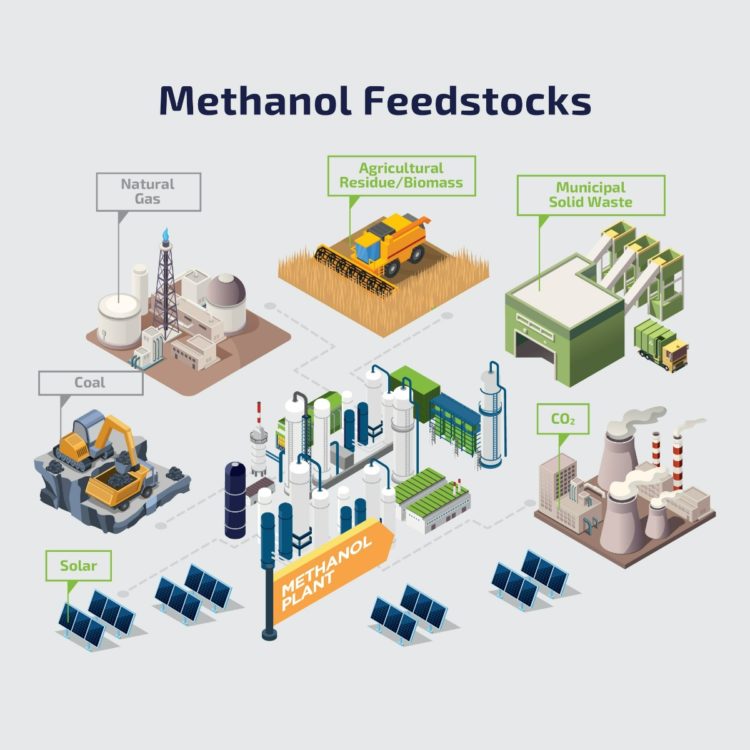
The plan is a facility producing renewable methanol — the company describes it across three pathways: biomethanol, e-methanol, and circular methanol — at a scale of up to 50,000 tonnes per year, running close to continuous operation. The intended feedstock mix is what makes it interesting: wood residues, refuse-derived fuel (RDF), captured CO₂, and green hydrogen, rather than fossil natural gas.
According to the project submission, the annual inputs are sizeable — roughly 55,600 tonnes of wood chips, around 47,700 tonnes of RDF, and approximately 2,900 tonnes of hydrogen. The site sits at Mauru ceļš in the free port, and the nearest protected nature area, the Platenes purvs Natura 2000 site, lies about 2.6 kilometres away, with the assessment now tasked with examining the project's environmental footprint in detail.
How the plant turns waste and renewables into fuel
The process chain is a recognisable Power-to-X and waste-to-fuel hybrid. Solid feedstock is converted through gasification into synthesis gas, that syngas is cleaned, and methanol is produced via synthesis. Hydrogen comes either from an on-site electrolyser or from external supply — a flexible setup that lets the project lean on green hydrogen as Baltic electrolysis capacity grows. The plant also includes its own combustion unit for heat supply, rated at up to around 100 MW, plus the supporting utilities, wastewater handling, and internal roads any industrial facility of this size needs.
What we find compelling here is the deliberate coupling of three things Latvia has in abundance — biogenic residues, an emerging renewable electricity base, and CO₂ that needs a home — into a single, exportable product.
Why Ventspils is the right address for Power-to-X
Ventspils brings something to this that's genuinely hard to replicate. It's a deep-water port, one of the largest on the eastern Baltic coast and among Latvia's biggest industrial hubs, with special economic zone status and a large bank of free industrial land inside the free port.
Three advantages stand out for alternative-fuel production specifically. The grid and renewable build-out: the port authority has been contracting solar parks since 2022 and is positioning itself around offshore wind, having joined WindEurope and the Latvian Wind Energy Association — exactly the renewable electricity backbone that green hydrogen and e-methanol need. The handling expertise: decades of moving liquid bulk and fossil-based fuels mean the storage, safety, and logistics know-how for handling and exporting molecules already exists on site. And the connectivity: TEN-T integration and deep-water berths make it a credible export point. That mix earned Ventspils recognition in the fDi Intelligence Global Free Zones of the Year 2024 ranking for its offshore wind and power-to-x work — and renewable methanol is a natural next layer on that foundation.
Where renewable methanol fits in the market
The demand side is no longer speculative. Renewable methanol qualifies as a renewable fuel of non-biological origin (RFNBO) when made with green hydrogen and the right CO₂, and EU policy is steadily pulling it into shipping. FuelEU Maritime sets tightening greenhouse-gas intensity limits on marine fuel, RED III asks fuel suppliers to deliver a growing share of RFNBOs to maritime by 2030, and the extension of the EU ETS to shipping adds a direct cost to staying fossil. Maersk and others are already operating dual-fuel methanol vessels and sourcing e-methanol from commercial-scale European plants.
For scale context, the European Energy facility at Kassø in Denmark — often cited as the first commercial-scale e-methanol plant of its kind — runs at around 42,000 tonnes per year. Biorefic NRG's planned capacity sits in that same league, which tells you the ambition here is commercial, not a demonstrator.
What this means for the Latvian hydrogen ecosystem
We've argued for a while that Latvia's clearest near-term hydrogen value isn't pure hydrogen molecules — it's the derivatives: the methanol, the e-fuels, the products with existing buyers and existing logistics. A renewable methanol plant in a deep-water port is precisely that thesis made concrete.
It's good to see a local developer carrying a project of this weight toward implementation rather than leaving the category to be defined elsewhere. Latvian hydrogen ecosystem stakeholders should read this as a marker of where the country's ports are heading — from fossil-fuel transit toward becoming genuine energy hubs that produce, store, and export clean molecules. The environmental assessment is still ahead, and that work matters. But the direction is set, and it's a direction worth backing.
Source: Atjaunīgā metanola ražošanas rūpnīcas izveide Ventspils brīvostas teritorijā (SIA “Biorefic NRG”)