Klaipėda Port Opens Lithuania's First Green Hydrogen Production and Refuelling Station — and Sets a Benchmark for Baltic Ports
Lithuania's first green hydrogen production and refuelling facility is now open at the Port of Klaipėda, producing around 127 tonnes of green hydrogen per year via PEM electrolysis for cars, heavy-duty transport, ships and port operations. We look at what the project delivers, how it builds on Tallinn's green hydrogen example, and what Latvian ports can take from it.
NEWS
HydrogenLatvia
6/10/20264 min read
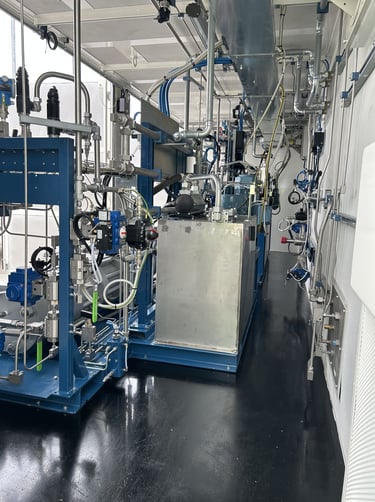
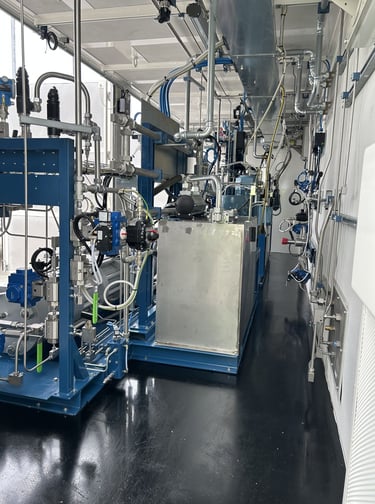
A milestone the Baltic hydrogen community has been watching for some time is now reality. In early June 2026, the Klaipėda Port Authority officially opened Lithuania's first green hydrogen production and refuelling facility — a project we have followed closely since its early development stages: Klaipėda Port's Green Hydrogen Station: A Baltic First That the Region Needed.
This is not just another piece of refuelling infrastructure. It is a complete, on-site value chain: green hydrogen production, storage and dispensing in one location, inside a working commercial port. For the Baltic region, that combination matters more than the headline alone suggests.
What the Klaipėda facility actually delivers
The facility uses a polymer electrolyte membrane (PEM) electrolyser to produce green hydrogen on site, with an annual production capacity of around 127 tonnes at full output. The hydrogen will fuel passenger vehicles, buses, heavy-duty trucks, ships and the port's own operations — roughly a quarter of production is earmarked for the Port Authority itself, including a new hydrogen-powered waste collection vessel.
The project timeline tells its own story about Baltic execution capability. Development began in 2023, construction started in summer 2025, key equipment arrived in October, and the first green hydrogen was produced in April 2026. Commercial hydrogen supply is expected to begin in autumn 2026.
Total investment stands at approximately €12 million, with around €6 million provided through the EU's NextGenerationEU facility under the Next Generation Lithuania recovery and resilience plan. LTG Group, Klaipėda Stevedoring Company Bega and Volvo Lietuva are among the partners exploring future hydrogen use cases across rail, terminal operations and road transport.
Algis Latakas, Director General of the Klaipėda Port Authority, captured the spirit of the opening well: only a few years ago, green hydrogen at Klaipėda Port was little more than an ambitious vision — today the port is becoming a gateway to future energy solutions.
Genuinely green, and why that distinction matters
The Klaipėda station joins a small but growing club of truly green hydrogen refuelling infrastructure in the Baltics. The reference point here is Tallinn, where the Utilitas Väo green hydrogen production unit and refuelling station opened last year, followed by Estonia's first public-access hydrogen station operated by Alexela — and a fleet of 30 hydrogen-powered Toyota Mirai taxis operating under the Bolt brand.
Both projects share the feature that separates them from much of Europe's early hydrogen mobility infrastructure: the hydrogen is produced via electrolysis from renewable electricity, on site or nearby, rather than reformed from natural gas. This stands in contrast to the existing station in Riga, which dispenses grey hydrogen produced from fossil natural gas. Grey hydrogen refuelling proved the operational concept in Latvia — the H2Nodes trolleybus experience was valuable groundwork — but it does not deliver the decarbonisation outcome that hydrogen mobility ultimately exists to provide.
Tallinn set the example. Klaipėda has now followed it at port scale. The pattern is clear: the Baltic green hydrogen infrastructure buildout is happening project by project, country by country — and genuinely green molecules are becoming the standard, not the exception.
Ports as the natural frontrunners of green hydrogen infrastructure
It is no coincidence that Lithuania's first green hydrogen facility was built inside its largest port. Ports concentrate exactly the conditions green hydrogen needs in its early commercial phase: a captive base of demanding energy users (vessels, cargo handling equipment, heavy-duty trucking, rail connections), industrial land with permitting pathways, grid access, and an institutional owner capable of carrying a first-of-a-kind project through development risk.
Add the regulatory pull — FuelEU Maritime and the broader ReFuelEU framework are steadily raising the value of renewable fuels in maritime logistics — and ports become the most credible early anchors for hydrogen demand in the region. Klaipėda's decision to design the facility as open infrastructure, available to businesses and residents rather than reserved for internal use, multiplies that effect.
The learning opportunity for Latvian ports
Latvian hydrogen ecosystem stakeholders should read Klaipėda's opening as a directly transferable case study. Latvia's ports — Ventspils, Liepāja and Riga — share the same structural advantages: maritime demand, industrial users, available land, and proximity to renewable generation buildout. Liepāja already hosts serious PtX ambitions through CIS Liepāja and the NorSAF initiative in the Liepāja SEZ, and the Freeport of Ventspils has been actively exploring Power-to-X development pathways.
What Klaipėda adds to the picture is proof of executable scale. A €12 million project, roughly half EU-funded, delivered from development start to first hydrogen in about three years, with a realistic anchor demand structure built around the port's own operations. That is a template a Latvian port authority could adapt without waiting for gigawatt-scale projects to reach FID. The recovery-and-resilience funding window that financed Klaipėda will not repeat in identical form, but CEF, the Innovation Fund and forthcoming EU instruments offer comparable routes for well-structured port hydrogen projects.
The first-mover lessons — permitting an electrolyser inside an operating port, structuring offtake between a port authority and commercial users, sequencing equipment delivery and safety certification — are now sitting next door, documented and accessible. Baltic cooperation has always been one of this region's quiet strengths. This is a moment to use it.
A regional buildout gathering real momentum
Step back, and the past eighteen months look remarkable for Baltic hydrogen mobility and infrastructure: Tallinn's full green hydrogen value chain went live, Klaipėda's port facility is now operating, and the Nordic-Baltic Hydrogen Corridor continues its feasibility work toward connecting the region's future production with continental demand. Each project de-risks the next. Each operating facility turns abstract strategy documents into visible, fuelling, working infrastructure.
Latvia has the ports, the grid position and the project pipeline to be next. The Klaipėda example shows what disciplined execution at realistic scale looks like.
Source: LinkedIn post