Germany's Hydrogen Pipeline Is Already a Third Sold Out
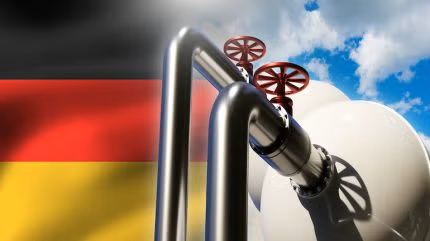
Germany's hydrogen core network has drawn 2.9 GW of capacity reservations from 32 companies within weeks of opening — a third of planned 2027 capacity already booked. For the Nordic-Baltic Hydrogen Corridor and Latvian producers eyeing export markets, this is the clearest demand signal yet that the Baltic-to-Germany route has a real buyer at the other end.
NEWS
HydrogenLatvia
5/17/20266 min read

Why 2.9 GW of early bookings in Germany matter for the Nordic-Baltic Hydrogen Corridor and the Latvian hydrogen ecosystem.
If you've been in this sector for a while, you've probably grown used to two kinds of hydrogen headlines. The ones that announce something grand and far-off. And the ones that quietly walk back a target nobody quite believed in to begin with. So when news breaks that actually moves the needle on demand-side reality, it deserves more than a scroll.
Here's what happened. Germany's hydrogen core network — the 9,041-kilometre backbone that's supposed to wire up the country's industrial demand to its production clusters and import points — opened its first capacity reservation window on 19 March. Within weeks, 32 companies had requested roughly 2.9 GW of capacity. That's about a third of the network's planned 2027 starting capacity of 7.7 GW. There's another 0.6 GW in cross-cluster transport requests on top of that. Most of the bookings already have formal reservation offers. The rest are being reviewed.
Translation, for those of us watching this from the Baltic side: someone is finally putting money where the strategy documents have been pointing for three years.
The Numbers in Context
A few facts that frame why this matters more than the average pipeline-progress note.
The German core network is planned to scale from 4.5 GW of capacity in 2026 to 15.9 GW in 2028 and 25.9 GW by 2030. Twenty-two companies operate the network, including Belgium's Fluxys, Dutch grid operator Gasunie, and German TSO Thyssengas — among them ONTRAS, which also sits at the southern end of the Nordic-Baltic Hydrogen Corridor we'll come back to in a moment. Where bookings exceed published capacity on a route, operators are running a structured case-by-case review. OGE, one of the operators, said every reviewed case so far has resolved positively.
Barbara Fischer, managing director of FNB Gas — the German gas TSO association — put it plainly: the level of demand so soon after opening shows how central the core network is to Germany's hydrogen market ramp-up. That's a careful sentence from someone who has no incentive to over-promise.
The Sceptics Are Still in the Room
It would be dishonest to write this without flagging the counter-argument, because it's a serious one. The Institute for Energy Economics and Financial Analysis (IEEFA) published a report this month warning that Germany may end up loading up to €45 billion of public spending on pipeline infrastructure that runs ahead of actual offtake. Their case: Germany's 10 GW electrolyser target for 2030 looks distant, and stretches of pipeline already built are sitting idle with no customers connected and no supply contracted.
That's a fair critique to take seriously, not dismiss. The honest read is that early reservations are not the same thing as binding contracts, and the gap between the two is where infrastructure-first strategies historically get into trouble. What changes if reservations convert to contracted volumes? Quite a lot. What changes if they don't? Probably an awkward few years of stranded steel.
But — and this is the part worth holding onto — the IEEFA report was written before the 2.9 GW number was public. The reservation window itself has now produced the first hard data point that the demand side is showing up, at least far enough to commit to capacity. Whether 32 companies follow through to firm contracts is the next test. For now, the signal is more affirmative than it has been in any quarter of the last two years.
Why Latvia Should Pay Attention
Now connect the dots back to this part of the map.
The Nordic-Baltic Hydrogen Corridor (NBHC) is the planned 2,500-kilometre pipeline running from Finland through Estonia, Latvia, Lithuania and Poland into Germany. It's a joint project of six TSOs: Gasgrid (Finland), Elering (Estonia), Conexus Baltic Grid (Latvia), Amber Grid (Lithuania), GAZ-SYSTEM (Poland), and ONTRAS (Germany). It holds EU Project of Common Interest status. The feasibility phase, supported by €6.8 million from the Connecting Europe Facility, is running through 2026 and into early 2027. Pre-feasibility work concluded that by 2040 the corridor could carry up to 2.7 million tonnes of renewable hydrogen per year between the six countries, with potential to cut up to 37 million tonnes of CO₂ equivalent annually by 2050.
The strategic logic of NBHC has always rested on a simple assumption: there will be enough industrial demand at the southern end of the line — in Germany — to justify the investment. That assumption is the load-bearing wall of the whole corridor. Without German offtake, NBHC is a beautifully engineered pipeline to nowhere.
The 2.9 GW reservation number is the first time we've seen that assumption tested against actual market behaviour. And it has held up — at least so far. Thirty-two companies, spanning the full hydrogen value chain, have voluntarily reserved capacity on the German receiving network. Some of them will be planning to source domestically. But a meaningful share will be looking for import options, and the geography of where renewable hydrogen can be produced cheaply in Europe — Finland, the Baltics, Poland — is exactly the geography NBHC was designed to serve.
For Latvian hydrogen ecosystem stakeholders, that's a signal that deserves to be read carefully and acted on, not just retweeted.
What This Means for Potential Latvian Producers and Project Developers
A few practical implications worth thinking through.
The export thesis just got more credible. Anyone developing a green hydrogen production project in Latvia — whether that's a port-adjacent electrolyser, a renewables-coupled facility, or an offshore-wind-linked design — has been operating on the assumption that German offtake is a viable target market. That assumption now has an early data point under it. Not proof. But signal.
Conexus Baltic Grid's role becomes more strategically significant. As Latvia's TSO and one of the six NBHC partners, Conexus sits on the route that connects Latvian production to German demand. The closer Germany gets to firm contracted volumes, the more pressure on every link in the corridor — Conexus included — to keep pace on feasibility, permitting, and engineering work. Latvian projects upstream and downstream of that pipeline gain optionality as a result.
The timing window is tightening, not opening. If German reservations convert to contracts over the next 12 to 24 months, the producers best positioned to plug into NBHC's first operational phase will be the ones that already have land secured, grid connections agreed, and permitting in motion. The companies that wait for the corridor to be finalised before starting development will arrive late to a market that has already allocated its capacity.
Funding windows are starting to align. Innovation Fund, REPowerEU, the European Hydrogen Bank, BEMIP, Connecting Europe Facility — the EU's funding architecture for hydrogen has matured to the point where there's a window for each project type. The German demand signal makes the offtake-side story easier to write in any of those applications.
The Honest Caveats
Three things this article isn't saying.
It isn't saying the German hydrogen market ramp is now certain — it isn't. The IEEFA concerns about over-building are legitimate and the gap between reservations and firm contracts is real.
It isn't saying NBHC's commissioning timeline has accelerated — it hasn't. National and cross-border feasibility studies are still expected to conclude in early 2027, and the pipeline is targeted for late-2020s commissioning depending on how quickly each country moves through its own planning and implementation phases.
And it isn't saying every Latvian hydrogen project should now reorient itself around export to Germany — domestic and Baltic-regional demand still matters, and a portfolio that depends solely on one offtake market in one country is more fragile than one with diversified outlets.
What it is saying is this: the demand-side scepticism that has shadowed European hydrogen for three years just took a meaningful hit. Not a fatal one. A meaningful one. And for a country sitting on the route between Nordic and Baltic renewable production capacity and Central European industrial demand, that's a development worth reading carefully and planning around.
The Quiet Implication
There's one more thing worth saying out loud, because it sometimes gets lost.
Infrastructure projects of NBHC's scale aren't built because the demand is already there. They're built because credible parties have made bets that the demand will be there by the time the steel is in the ground. Every additional data point that confirms those bets — a Dutch pipeline section taking its first molecules in January, German underground caverns being filled this spring, 2.9 GW of reservations in Germany this month — moves the corridor from "interesting idea" toward "default future". Slowly. Imperfectly. But unmistakably in one direction.
For Latvian project developers, hydrogen ecosystem stakeholders, and the broader Baltic energy community, the work between now and NBHC's commissioning is the work of being ready when that future arrives — not catching up to it.
Source: Germany’s Hydrogen network reservations exceed expectations