Fourth EU Hydrogen Bank Auction: €500m, and a Rule Change That Favours Latvia
The European Commission has put €500m behind the fourth European Hydrogen Bank auction — 61.5% less than the third round, in a market that was already oversubscribed more than six times over. Buried in the draft terms is a tie-break rule that favours countries which have drawn little Innovation Fund money so far, which is exactly where Latvia sits.
NEWS
HydrogenLatvia
7/16/20263 min read
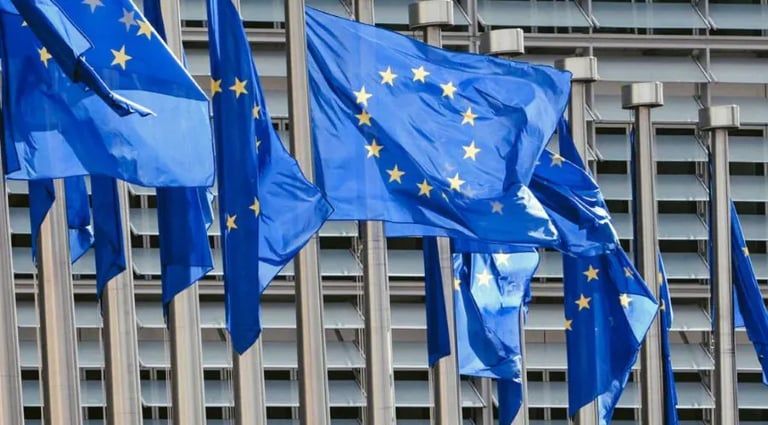
The European Commission has put €500m on the table for the fourth European Hydrogen Bank auction — around 61.5% less than the €1.3bn offered in the third round. Draft terms and conditions were published on 9 July 2026, written consultation runs until 24 August, and bidding is expected to open in December. In a market where the last auction was oversubscribed more than six times over, that is a much smaller room with the same crowd trying to get in.
A smaller pot in an already crowded market
The third auction attracted 58 bids from 11 countries chasing €1.3bn. The Commission ultimately selected nine projects across seven European Economic Area countries, awarding just over €1bn for close to 1.1GW of electrolyser capacity. Demand outran the budget by a factor of more than six. Halving the pot does nothing to shrink that pipeline — it simply raises the bar for who clears it.
The core mechanism stays as it was. Developers bid the lowest fixed premium they need per kilogramme, bids are ranked from cheapest upward, and support is paid for up to ten years against certified and verified production. What changes is the shape of the money. Roughly €350m is ring-fenced for renewable hydrogen produced under the bloc's RFNBO rules, with a €150m basket open to either RFNBO or low-carbon electrolytic hydrogen. The dedicated maritime and aviation baskets seen in earlier rounds have been removed.
The conversion problem behind the budget cut
The smaller number is not only about tighter EU finances. It reflects an uncomfortable track record. The second auction allocated €1.2bn to 15 projects, but only €270.6m was ever signed — six projects in Spain, Finland and Norway — after the rest dropped out of grant negotiations. The third round's winning bids spanned €0.44 to €3.49 per kilogramme, a spread wide enough to suggest that some bidders were pricing to win rather than pricing to build.
That criticism — that the auction rewards unrealistically low bids — is now shaping the design. Successful projects must still reach financial close within two and a half years of signing a funding agreement and enter operation within five. And the Commission has added tie-break rules to separate bids that land at the same price.
The tie-break rule that reads well from Riga
This is the part of the draft that Latvian hydrogen ecosystem stakeholders should read twice. Where bids are otherwise level, priority goes to projects requesting less grant funding, to projects expected to start operating sooner, and — the one that matters here — to projects from countries that have received less Innovation Fund support to date.
Latvia has received very little. In almost any other sentence that is a line written with regret. In this auction it is a ranking advantage, and it will not stay available forever. A design detail intended to spread EU money more evenly across the bloc is, in practice, an open door for the countries that have so far stayed outside.
The Baltic gap in the winners' list
Across three auctions, the money has gone to Finland, Norway, Spain, Portugal, Germany, the Netherlands, Denmark, Greece and Austria. Not one Baltic project has been selected. That is not a scandal — it reflects where mature, financeable electrolyser projects sat between 2023 and 2026 — but it is a pattern, and patterns harden into assumptions about where hydrogen gets built.
Lithuania has at least been in the room. It put national money behind the Auctions-as-a-Service mechanism in the second auction, alongside Spain and Austria, letting Vilnius back qualified projects that fell below the EU budget line without running a separate national scheme. Latvia has never used it. With a €500m pot and oversubscription almost certain, more good projects will fall below the cut-off in this round than in any before it. Auctions-as-a-Service is built precisely for that situation.
The window before December
Two dates matter. Written consultation on the draft terms closes on 24 August 2026, meaning the design is still open to argument — including from Baltic developers who can make a concrete case on operating timelines or maturity thresholds. Then bidding opens around December, and the arguing stops.
Between those dates sits the real work: knowing whether any Latvian project can credibly clear a five-year build clock, and deciding whether the state wants a seat at the Auctions-as-a-Service table. While still challenged by high costs and low availability, green hydrogen is an increasingly viable route to decarbonising industrial processes — and the fourth auction is the cheapest instrument on offer for testing that in the Baltics. A smaller pot is not the same as a closed door. It just means fewer people get through, and the ones who do have read the rules properly.
Source: Just €500m allocated for fourth European Hydrogen Bank auction