CETPartnership Joint Call 2026 Opens a Hydrogen Funding Window — What It Means for the Baltic Value Chain
The CETPartnership Joint Call 2026 has opened its Hydrogen and Renewable Fuel module, with pre-proposals accepted from 8 June and a deadline of 8 October 2026. Here's what the call covers, how it connects to the Baltic hydrogen value chain, and what Latvian and regional players should weigh before joining a consortium.
EVENTS
HydrogenLatvia
5/21/20264 min read
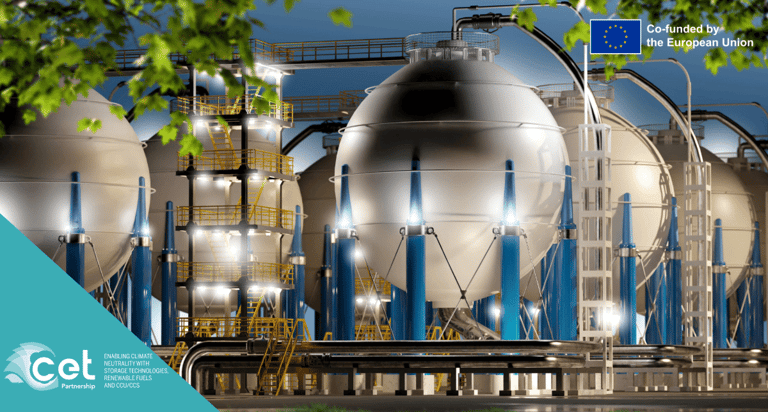
Europe just put another serious round of money behind hydrogen and renewable fuels. The Clean Energy Transition Partnership (CETPartnership) has launched its fifth annual Joint Call, and one module sits squarely in our world: Call Module 2026-05, Hydrogen and Renewable Fuel. It's worth understanding properly, because the Baltic hydrogen story has reached the point where calls like this stop being abstract EU paperwork and start being a way to get real projects funded and real partners around the table.
Here's the short version, and then the detail that actually matters.
What the Hydrogen and Renewable Fuel Module Covers
The module backs research and innovation across the full hydrogen and renewable-fuel value chain — clean production, storage, distribution and end use. That includes advanced biofuels and synthetic renewable fuels like e-fuels, and it explicitly welcomes power-to-X integration. The thinking behind it is the one we keep coming back to: hydrogen and renewable fuels are how Europe decarbonises the sectors electricity can't easily reach — heavy industry, aviation, shipping, heavy-duty transport.
The call names six challenge areas it wants proposals to tackle: sustainable and competitive production at costs that can compete with fossil alternatives; value-chain integration across production, storage, transport and use; infrastructure readiness, from pipelines to storage to distribution; safety and reliability in handling and transport; system integration that manages intermittency and stays interoperable with the wider energy system; and the market, regulatory and societal side — certification, business models, social acceptance.
A few hard requirements are already clear. Projects need to end at TRL 5 or higher, demonstrate an uplift of at least one TRL, and include at least one industrial partner. Module 05 is the value-chain-and-technology track; if a project is really about integrating hydrogen into a specific industrial site, that belongs under Call Module 09 instead. Worth getting that distinction right before drafting anything.
The Timeline and How the Application Works
This is a two-stage process, and the dates are firm enough to plan around.
The call launched at the end of May 2026. Pre-proposal submission (Stage 1) opens on 8 June 2026 at 14:00 CEST and closes on 8 October 2026 at 14:00 CEST. There's a Q&A session on 9 September for anyone mid-draft. Selected pre-proposals get invited to Stage 2, with full proposals opening in January 2027 and due in March 2027. Funding decisions land at the end of June 2027, and projects start between September and December 2027.
So the working window is now through early October. That's enough time to find the right consortium, but not so much that it pays to wait.
One structural point: CETPartnership aligns national and regional funding programmes rather than running one central pot. Each partner is funded directly by their own country's agency, against that country's eligibility rules. Which leads to the part Baltic players need to read carefully.
The Funding Reality for Latvian and Baltic Participants
Honesty serves everyone better than hype here. In the published funding-agency table for Joint Call 2026, Lithuania (through LMT) is funding the hydrogen module, alongside Germany, Poland, Norway, Sweden, Spain, Denmark and others. Latvia and Estonia are not currently listed as funding agencies for this call.
That doesn't shut the door — it changes the route. A Latvian company, research group or developer can still join a project consortium as a partner. The practical paths are to team up with partners in funded countries and contribute expertise, assets or a demonstration site to the consortium, or to arrange funding for the local contribution through other means. Given how integrated the regional hydrogen scene already is, a Latvian site or capability inside a Lithuanian-, Polish- or German-led consortium is a credible and realistic position.
For Latvian hydrogen ecosystem stakeholders, the value isn't only the grant line. It's the consortium itself — the cross-border relationships, the visibility inside European project networks, and a seat in the projects that will shape how hydrogen actually gets built across the Baltic Sea region.
Why This Matters for the Baltic Hydrogen Value Chain
Step back and the timing makes sense. The Nordic-Baltic Hydrogen Corridor — the planned roughly 2,500 km pipeline running from Finland through Estonia, Latvia, Lithuania and Poland to Germany — holds EU Project of Common Interest status and is targeting a commercial operation date from 2033, with the aim of moving around 2.7 million tonnes of renewable hydrogen a year by 2040. Conexus Baltic Grid carries the Latvian leg, alongside Elering, Amber Grid, Gasgrid, GAZ-SYSTEM and ONTRAS. Feasibility studies on routing, compressor stations and permitting are running through 2026, and the corridor's Call for Interest has been actively gathering market input.
Infrastructure of that scale only works if there's something to put through the pipe and somewhere to use it. That's the gap calls like CM2026-05 help close — production technology, storage, end-use solutions, the unglamorous engineering that turns a corridor on a map into a working market. Baltic players who get into well-built consortia now position themselves for the demand centres and offtake structures taking shape across the region.
The macro backdrop reinforces it. The module sits inside the EU's broader push under REPowerEU and the wider clean-energy framework, where renewable hydrogen is treated as essential infrastructure rather than a nice-to-have. For a region with strong renewable potential and a maturing corridor project, that alignment is an advantage worth using.
What to Do Next
If hydrogen or renewable fuels sit anywhere near your work, the move over the next few months is straightforward: read the full call text once it's published this summer, get clear on whether your project fits Module 05 or Module 09, and start the conversations that turn into a consortium. CETPartnership runs a matchmaking platform built precisely for finding partners across borders, and the 8 October pre-proposal deadline gives a real but finite runway.
Participate in an online information event:
Information Event: Call Module 04,05,06 and 09
Time: Thu, 28 May 2026, 14:00 - 15:00 CET
Registration via CET Partnerships matchmaking platform:
https://www.b2match.com/e/clean-energy-transition-partnership-2024/events/848
The Baltic hydrogen value chain is moving from planning into delivery. Calls like this are where local players stop watching that shift and start being part of it.